
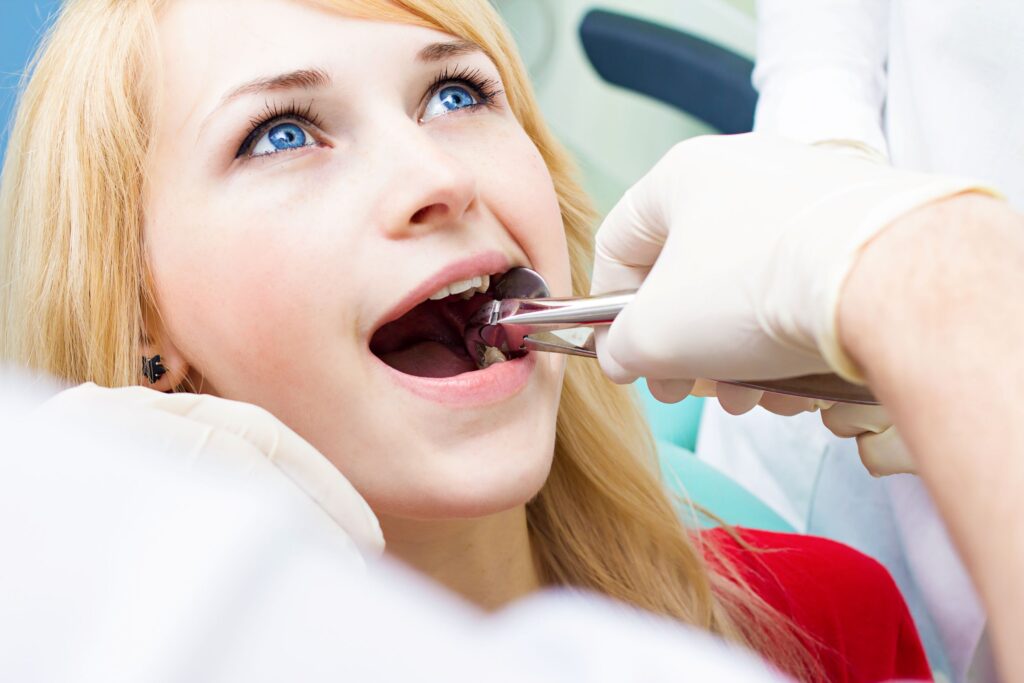
It’s natural to feel nervous about dental procedures that have the potential to hurt, such as tooth extractions. Thankfully, many dentists and periodontists understand that you might be anxious about your upcoming visit, and will numb your mouth before starting your treatment to help you feel comfortable. Many also offer options for sedation, so you won’t need to worry about potential aches until the medications wear off.
Then, it’s important to follow the provided post-operative instructions to avoid a potentially painful complication known as dry socket. Continue reading to learn more about this condition and how to prevent it!
What is Dry Socket?
Once your troublesome tooth has been removed, your mouth must form a blood clot to protect the recently exposed nerves, bone, and connective tissues. It typically looks like a dark scab, and it’s important that it’s left alone so that you can heal effectively.
Unfortunately, consuming overly hot foods and beverages, drinking through a straw, or touching it with your tongue or fingers could dislodge it, leading to a side effect known as dry socket. Not only can this be incredibly irritating, but it can also add to your recovery timeline, as it takes a while for your mouth to form a new one.
How Do I Know if I Have Dry Socket?
It’s normal to feel sore and swollen after having a tooth pulled, so many patients wonder how they’re supposed to know whether they’ve developed this complication. Paying attention to your dental health during recovery can help you identify the signs so you can contact your provider if needed.
For example, if you see bone instead of a dark blood clot at the extraction site, you might have a problem. But you’ll likely know you’ve developed dry socket if you experience persistent or radiating mouth, facial, jaw, head, or neck pain. This condition sometimes also causes a tooth or gum infection, as well as an unpleasant taste in the mouth or unusually bad breath.
How Can I Prevent Dry Socket?
Your periodontist will provide a comprehensive list of instructions after your treatment that are intended to help you mend as quickly and effectively as possible while avoiding potential problems, including dry socket. Some common tips include:
- Drink plenty of fluids from a glass, not a straw.
- Don’t brush and floss the site right away, but rinse gently with warm salt water for the first day after your treatment.
- Avoid overly hard, crunchy, acidic, spicy, sugary, or hot foods.
- Stop smoking for at least 72 hours (preferably longer) to allow your gums to heal.
- Get plenty of rest and steer clear of physical activities that elevate your heart rate.
If you suspect you have dry socket, your periodontist may be able to help by disinfecting the site and applying a medicated dressing to reduce aches and promote swift recovery.
About the Practice
Patients at Pioneer Periodontics & Implant Dentistry benefit from three board-certified experts who are passionate about helping them improve their lives by enhancing their dental health. Dr. Rutledge, Dr. Le, and Dr. Bradley collaborate to offer a variety of complex, periodontal, cosmetic, and surgical procedures, including extractions, to help you build and maintain a happy, healthy smile. You can request an appointment on the website or call (402) 483-7631.